- #DOJ cites Ferguson for deploying snipers during unrest. Didn't know Assad in MO. Stop Militarization of U.S. Police
Wednesday, July 1, 2015
DOJ cites Ferguson for deploying snipers. Assad in MO?
 The Great Roll Call


Thursday, May 28, 2015
Make No Mistake, Price and Clay Put the Music World on Notice With “This Time For Real”
About every five years or so a Soul album comes out that is so good, so right, that you are scared your turntable’s stylus will melt down. I think of Eddie Floyd’s, William Bell’s and Otis Reddings great records on Stax in the 1960s, Al Green and the Hi Rhythm sections records produced by Willie Mitchell in the 70’s, out on the West Coast it was Charles Wright and the Watts 103rd Street Rhythm Band. You can’t forget Tyrone Davis, ZZ Hill, Syl Johnson or Mr. Bobby Bland down South. Back East you had Gene Chandler and Curtis Mayfield in fact sometimes it was hard to tell them apart. Down in New Orleans there was Eddie Bo, Willie Tee, the Meters and later the Nevilles. God I love sweet soul music. I sure wish they still made music like that...
Well my Christmas wish came early this year or more precisely on May 19, 2015 because that is the day that two of my favorite soul singers still fighting the good fight, Otis Clay and Billy Price joined forces and released their absolutely wonderful new album, “This Time for Real”.
I know coming from me, you’re thinking “For Real?” No Really, it is that good. From the opening strains of “Somebody Changing My Sweet Baby’s Mind” you are transported to that musical Loveland where songs like Davis’ “Can I change My Mind”” and Floyd’s “I Never Found A Girl” serve as sweet inspiration, all the way through to the albums last track, an inspired version of “You Got Me Hummin’” that finds Clay and Price channeling Sam and Dave so authentically it is downright spooky. Along the way the former Hi Records stable mate to Al Green and the Hodges and Billy Price aka William Pollak of Roy Buchannan and the Keystone Rhythm Band fame prove.
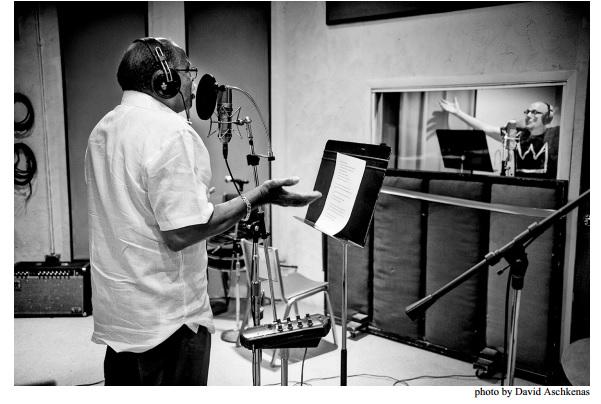
Everything works on this disc, ably produced by Duke Robillard a man who knows just a little about working with great horn sections. Robillard, a cofounder of Roomful of Blues, tapped two of the current members of Roomful, Doug Woolverton on trumpet and Mark Earley on Saxes , to round out his current band of Mark Teixiera on drums, Brad Hallen on bass, Bruce Bears on keys and of course Duke handling all guitars. Add the excellent backup vocals trio of Theresa Davis, Dianne Madison, Diana Simon and the result is a band that will have you doing double takes to the liner notes (for which I thank you Bill and Mark!).
I would be remiss if I did not mention that Mr. Earley arranged all the horns on this record. Just listen to the horns on tracks like "All Because of Your Love" and "Too Many Hands" and you will agree that the arrangements and execution are top notch. Woolverton and Earley deserve a big share of the credit for giving this record its timeless, authentic feel and tone.
Besides the above mentioned tracks, highlights for me include something funky, Syl Johnson’s “Goin to the Shack” which is perfect pacing in follow up to the sugar rush from the opening track and the slow burn of "I'm Afraid of Losing You" which follows. The previously mentioned “All Because of Your Love” is so good I am without words …You get the picture. For the romantically inclined listen how Clay and Price handle "Love Don't Love Nobody". The two singers voices compliment each other very nicely and the phrasing throughout the album is impeccable. For Americana and country fans there is a great version of Book of Memories complete with Bruce Bears' honky tonk piano and Duke adding some Nashville inspired licks on guitar.
I also just love the selection of Los Lobos “Tears of God” which brings to mind Ruthie Foster’s cd “Let it Burn” from a few years back. Like "This Time For Real" Ruthie did an album of mostly covers for "Let It Burn" but the arrangements were so fresh and the performances so killer, you did not care. Like Price and Clay she also covered a Los Lobos track, "This Time" and made it her own.
No detail was overlooked in this labor of love with beautiful art and design by MaryBianchi and Hyla Willis. Add David Aschkenas very cool photography and the end result is a gorgeous product that must be owned in its tangible form.

Let's hope that Clay, Price and Robillard as well as the the Roomful horn players can coordinate their schedules this summer and Fall to do some live performances showcasing this material. If you do get out to see Mr Clay and/or Mr. Price buy the cd directly from them at their show or, if like me, you can’t wait, it can be purchased at http://www.billyprice.com/billyprice/store.php
Saturday, May 16, 2015
Riley Ben "Blues Boy" B.B. King: September 26, 1925 - May 14, 2015

When I learned of the death of Riley Ben "B.B." King
my first thoughts went to my old friend and former client Ron Levy. Ron was blessed to be the keyboard player in
the B.B. King Band from 1969 to 1976. Due
to the number of condolences he received, Ron prepared the most beautiful
tribute to Mr. King I have come across
to date. With Mr. Levy's express
permission I republish the following tribute:

"My B.B. King” by Ron Levy
I was privileged to have the unique and special honor of
working with one of the greatest American artists of all time, B.B. King. A
great man known and loved around the world for his grace, soulful musical
genius and genuine humility. Mr. King is not just ‘King of the Blues’ but a
beloved man whose personal qualities and examples of leadership earned the love
and respect of every one of us that worked for and knew him.
B.B. often called me his “son” on and off stage and treated
me like one he truly loved. The feeling was mutual and always will be. As a
personal and musical role model, I never saw him fail to take the high road, or
give less than 100% of himself.
I described and detailed many specific examples of this in
my book, “Tales of A Road Dog” (published by Levtron.com) devoting five
chapters to Mr. King and the B.B. King musical family I grew up with on the
road performing on every continent short of Antarctica. A family that B.B.
nurtured and a family whose devotion and familial bonds are still strong today.
Every musician who played for Mr. King either before or since my tenure
(1969-76), shares this same fraternal kinship and always will, as well as our
mutual friends.
Lately, many have wondered, “Why is B.B. still working
despite his advanced age and declining health?” The answer is simple. Mr. King
has always felt an unwavering responsibility for “his” people, the musicians
whose livelihoods and families depended on him. He also felt a great
responsibility and love towards his unwavering fans. I never saw him leave a
venue until he had signed autographs, posed for photos and spoke or listened to
every single fan that came to him. He was always a true gentleman. So many
times over the years he would remember the names of these fans, and their children
and relatives. Some of whom he might not have seen in decades. He loved all
people with a king sized heart and was giving of himself to a fault, pained if
he felt he ever let anyone down.
B.B. has given me many fond memories. I still cherish his
hearty laugh and broad smile when remembering his response to one of my crazy
stories or jokes, youthful naiveté or something I played well he liked.
Sometimes he’d grimace when I played, said or did something back-asswards too!
Yet he was just as gentle at those times; setting me straight and making sure
‘I got it’. Combining the patience of Job with the wisdom of Solomon and his
Delta country parables, he won my total respect and admiration. His
wholehearted paternal pride inspired me to work harder to do my very best, just
like him.
I was only sixteen years old when I first met Mr. King in
1967 as a fan. Now in my sixties and 23 years older than B.B. was when we first
met, I know it still amuses him to regard me as a grown man. During our reunion
after a concert last year, we were able to share things with each other man to
man, that grew quite personal and emotional. Unspoken, we both realized this
could be our very last time together. He graciously asked me to play on his
next album even though we both knew it would never be. Eventually he tired and
we bade each other our fond farewells, and hugged goodbye. We had reached
deeply inside each other’s hearts and souls once again.
And, it was very good and complete.

For more on Mr. Levy's life and times, not only the B.B. King
Band but in Albert King's Band as well an incredible life in music, order his
wonderful book "Tales of a Road Dog:
The Lowdown along the Blues Highway" at http://www.levtron.com/ and I guarantee you will not be disappointed.
Tuesday, May 5, 2015

Sunday, May 3, 2015
Alejandro Escovedo Brings His Sensitive Boys Back to the Dakota Jazz Club

Despite the name, the Dakota and its mercurial owner Lowell
Pickett has been quietly booking some of the better Americana, Roots and Blues
acts to his first rate restaurant and music club located on the first floor of
an office tower at the corner of Tenth Street and Nicollet Avenue in downtown
Minneapolis for years now.
While to some
the idea of béarnaise and the blues may seem as out of place as, say, escargot
and Escovedo, the naysayers couldn’t be more wrong. And if you think that the club formerly
associated with the white hair, white shoes and white belt crowd might even
subconsciously effect the type of show that Americana and Roots fans favorites
like Dave Alvin and Escovedo perform when at the Dakota, just check out my past
reviews.

At one
recent Dakota show witnessed by yours truly, Escovedo even took perverse
pleasure in breaking down the staid stereotype of the home of jazz denizens by
mockingly apologizing for the volume level of his performance just before
turning it up another notch ala Dylan gone electric.
So if you have not yet o.d.’d on boxing analogies in the
aftermath of the “fight of the century”, if you are within driving distance of
the Twin Cities this Thursday do not miss a chance to see the True Believer son
of a prizefighter, the “Man of the world” who openly boasts “I can take a
punch, I can take a swing” and unlike the suckers who paid too much for a
mediocre fight on pay per view, you won’t be disappointed.
Sunday, March 8, 2015
Roadtrip Report: Hope and Optimism From the Heartland
As we gear up
for the next big smackdown, aka the Presidential election cycle, I thought for
a change I would spend a little time to report back on what is right in America
these days as the Great Roll Call finally lived up to its new name with the
addition of the word Roadtrip to its monker.
My great
nephew Hayden is celebrating his first birthday today and my son August
celebrated his 20th birthday on Friday. As I rarely get to see my
sister's family even though they live just 4 states away in Oklahoma and I in
Minnesota, I though this would be the perfect occasion to surprise them with a
visit. Thanks to some last minute juggling by my friends Bob and Cassie
at work and an incredibly generous offer from my old buddy Ralph, who agreed to
take Sausage the wonder dog into his home for the weekend, August and I were
able to break the ties that bind and slip our mortal coils in Minnesota about
1:00 A.M. Saturday March 7th.
With a full
moon high in the clear, cold, Minnesota night sky, the two amigos headed South
on I35 like a couple of Blues Brothers on a mission from God. One of the
first things I am glad to report is the infrastructure known as the interstate
highway system, though a bit frayed these days, got us to our destination safe
and sound.
About 5:00
A.M. I started to get double vision and my son suggested we pull off at the
next rest area to rest our eyes for a couple hours. It did not take long
before we were greeted by a blue rest area sign and were pulling into a well
maintained rest area in Southern Iowa crowded with big rigs but we had the car
side all to ourselves. My little car was surprisingly comfortable with
the front seats laid all the way down and we were out in no time.
After a couple
hours shut eye we were sufficiently refreshed to continue with PBS Weekend
Morning edition as our travel companion. While Scott Simon kept us up to
date with what was happening in an ever complicated and discouraging world,
there were also lots of signs of good news too. The economy was finally
picking up steam, job numbers and GPD were up to some of their best levels in
nearly twenty years and from what we saw in Iowa and Missouri, attests to just
how far we have come since the nadir of the Great Recession seven years
ago.
Every where we looked we saw signs of a great country on its way back. As
we rolled into Kansas City around 9 A.M. on a Saturday morning traffic was
heavy with people on their way to jobs that did not exist at the height of the
recession. I can remember a time not too long ago when you could have
fired a cannon of grapeshot down the middle of the freeways and beltways that
encircle this country's major metropolitan areas and you would have been lucky
to have hit just one car, now the carnage would be akin to that of the First
Minnesota Regiment at Gettysburg.

We stopped at
the Harrah's Casino in Kansas City with the idea we would buy some cigars and
play a few hands of blackjack only to be turned back by Missouri's minimum age
of 21 to gamble. It was however an opportunity to restore on a very
small scale the hopes for better race relations in the country as my son and I
were assisted by a couple of lovely African American women employees of
Harrah's in finding the nearest tobacco store to purchase cigars to hand out at
my great nephew's party.

After biscuits
and gravy at the Hardees in Ottawa Kansas it was back on the road
again. We made good time in the rolling hills of
the Flint Hill Grasslands as we continued heading West towards
Wichita and passed an old favorite haunt, the Cotillion Ballroom home of many
memorable Roomful of Blues shows I attended over the years. Just as
we were getting tired of the monotony that is the interstate we got off it in
favor of the slower but more scenic state highway and a more direct route to
our eventual destination, Hardtner, Kansas.
Unfortunately
this was also to prove a costly decision for your lead footed
narrator. As we got within 20 miles of our eventual destination I
was still traveling at interstate velocity and failed to notice the oncoming
SUV until it lit up like a Christmas tree signaling me to pull
over. I immediately did and had an encounter with an affable and
thoroughly professional officer with the Kansas State Patrol. Anyone
who has read this blog or knows me is well aware of my intolerance for misuse
of power committed by those sworn to protect and serve. There was no
attempt to expand the scope of a routine traffic stop into a fishing expedition
for extra income for his department via the often misused civil forfeiture
laws. So even though it cost me hard earned money I really could not
afford to part with, I accept personal responsibility and tip my hat to Officer
Quick for the professional and legal manner in which he conducted the stop.
If only police
departments in Ferguson, Missouri, Los Angeles County or the City of
Minneapolis had members in their departments the caliber of Officer Quick of
the Kansas State Patrol the state of law enforcement and community
relations in this country would be in a much better place.
While you can
always debate whether these periodic economic ups and downs are merely cyclical
or that the government really does not make that much of a difference in these
matters, one way or another, one needs only to look to the decisions made
by the European Union for comparison to see the wisdom of our current
administration's policies. Unlike Europe and Great Britain which pursued
a policy of austerity for austerity sake, the Obama Administration and Federal
Reserve pursued an economic policy emphasizing government stimulus and low interest
rates as private capital had all dried up and the markets screeched to a halt.
In retrospect,
if you are at all honest with yourself, it would be hard to fault the President
and not admit this was a superior approach over the Hoover like sit back and do
nothing approach of his predecessor or the austerity approach which had landed both
Europe and Great Britain back to the brink of another recession. Despite
all the racist xenophobia on the right and the "sky is falling"
harbinger of doom cries from the Tea Party, stimulus spending did not bankrupt
the country and end life in America as we know it, rather, it saved it.
Furthermore I
truly hope that it dispels once and for all the banal and absurd notions of the
Tea Party that problems to a system as complex as the national economy, with
concepts like the federal deficit, national debt and their interplay with
federal fiscal policies could be reduced down and solved as simply and easily
as balancing the household checkbook at the kitchen table, if we only had the
gumption. These views, which to some seem like common sense, are as
misleading and misguided as they are naive.
No, it is
morning in America again and I'm not referring to that Madison Avenue fantasy
that was sold to the American public some 30 years ago at the Republican
Convention as a distraction, so that they could continue to implement that
failed and cynical economic policy known as trickle down. Just look
around and see the result of that devastating policy: a non-existent
middle class, and an ever burgeoning class of working poor. I had to
laugh the other day when I heard the news report that 80% of Americans still
referred to themselves as middle class yet were living paycheck to paycheck.
If I was
granted just one wish regarding the upcoming presidential election of 2016 it
would be for Americans to really think their next vote out. Take some
time, pay attention to the details, get news from multiple, diverse sources
(including some foreign news sources) and from original sources if possible.
and bone up on their knowledge of American history and
socioeconomic demographics. As we have trended more conservative
are we doing better off or are you, like I, really uncomfortable by the all time
record level of inequality and disparity in wealth? Is your lifestyle,
quality of life, (e.g. time away from work) getting better? As we advance
as a society, are all the benefits and rewards for the most productive labor
force in the history of the world getting misdirected to a tiny number of
elites in society and in a hugely disproportionate ratio between compensation
and their contribution to an organization's success.
Sunday, February 8, 2015
BRINGING IT ALL BACK HOME: DYLAN USES ACCEPTANCE SPEECH AS MUSICCARES PERSON OF THE YEAR TO SAY THANK YOU, SHED INSIGHT ON HIS SONGWRITING, SPEAK TRUTH TO POWER IN THE MUSIC INDUSTRY (AND GET A FEW THINGS OFF HIS CHEST)
Like a Pineapple Express, last night at the MusicCares Awards banquet, where he was honored as its person of the year, Bob Dylan opened up and let out a torrential downpour that lasted for over a half hour. A torrent of thanks to those who have helped him, especially early in his career, let us in like never before on how it was that he came to write, no channel, the Zeitgeist of one of America's most iconic periods, the Sixties, deliver with Joan Baez like "devastating honesty" his critique on various aspects of the music industry and music press and, along the way, gets a few things that have been welling up off his chest.
This might seem strange to some coming from a guy who was the Brian Williams of his day when it came to his personal biography, apparently so insecure, ashamed (or resentful) of his Minnesota roots that he invented a music resume that included time spent in the Southwest under the tutelage of a blues master. But who can fault him, or Williams or Rather (Dan) for that matter? Certainly not I. If you are genuine and have been around for any length of time you will discover that what makes up a person are not isolated incidents, but rather who one is as a person are the sum of a lifetime of incidents and as far as I am concerned all three of the aforementioned gentlemen are well out of the red and into the black in the great Neil Young ledger book of life.
So when my brother, a great admirer of Dylan, emailed me earlier this morning that I had to hear his acceptance speech from last night I scoured the net for reporting on the event and hopefully a recording of his speech but the best I could find thus far is the following transcript reported by the L.A. Times
After being introduced by national treasure and everything Ronald Reagan was not, President Jimmy Carter, Dylan took the podium and delivered the following:

This might seem strange to some coming from a guy who was the Brian Williams of his day when it came to his personal biography, apparently so insecure, ashamed (or resentful) of his Minnesota roots that he invented a music resume that included time spent in the Southwest under the tutelage of a blues master. But who can fault him, or Williams or Rather (Dan) for that matter? Certainly not I. If you are genuine and have been around for any length of time you will discover that what makes up a person are not isolated incidents, but rather who one is as a person are the sum of a lifetime of incidents and as far as I am concerned all three of the aforementioned gentlemen are well out of the red and into the black in the great Neil Young ledger book of life.
So when my brother, a great admirer of Dylan, emailed me earlier this morning that I had to hear his acceptance speech from last night I scoured the net for reporting on the event and hopefully a recording of his speech but the best I could find thus far is the following transcript reported by the L.A. Times
After being introduced by national treasure and everything Ronald Reagan was not, President Jimmy Carter, Dylan took the podium and delivered the following:
I'm glad
for my songs to be honored like this. But you know, they didn't get here by
themselves. It's
been a
long road and it's taken a lot of doing. These songs of mine, they're like
mystery stories, the
kind
that Shakespeare saw when he was growing up. I think you could trace what I do
back that
far.
They were on the fringes then, and I think they're on the fringes now. And they
sound like
they've
been on the hard ground.
I should
mention a few people along the way who brought this about. I know I should
mention
John
Hammond, great talent scout for Columbia Records. He signed me to that label
when I was
nobody.
It took a lot of faith to do that, and he took a lot of ridicule, but he was
his own man and
he was
courageous. And for that, I'm eternally grateful. The last person he discovered
before me
was
Aretha Franklin, and before that Count Basie, Billie Holiday and a whole lot of
other artists.
All
noncommercial artists. Trends did not
interest John, and I was very
noncommercial but he stayed with me. He believed in my talent and that's all
that mattered. I can't thank him enough for that.
Lou Levy
runs Leeds Music, and they published my earliest songs, but I didn't stay there
too long.
Levy
himself, he went back a long ways. He signed me to that company and recorded my
songs
and I
sang them into a tape recorder. He told me outright, there was no precedent for
what I was
doing,
that I was either before my time or behind it. And if I brought him a song like
"Stardust,"
he'd
turn it down because it would be too late. He told
me that if I was before my time and he didn't really know that for sure
but if it was happening
and if it was true, the public would usually take three to five years to catch
up so be prepared.
And that did happen. The trouble was, when the public did catch up I was
already three to
five years beyond that, so it kind of complicated it. But he was encouraging,
and he didn't judge
me, and I'll always remember him for that.
Artie
Mogull at Witmark Music signed me next to his company, and he told me to just
keep
writing
songs no matter what, that I might be on to something. Well, he too stood
behind me, and
he could
never wait to see what I'd give him next. I didn't even think of myself as a
songwriter
before
then. I'll always be grateful for him also for that attitude.
I also
have to mention some of the early artists who recorded my songs very, very
early, without
having
to be asked. Just something they felt about them that was right for them. I've
got to say
thank
you to Peter, Paul and Mary, who I knew all separately before they ever became
a group. I
didn't
even think of myself as writing songs for others to sing but it was starting to
happen and it
couldn't
have happened to, or with, a better group.
They
took a song of mine that had been recorded before that was buried on one of my
records and
turned
it into a hit song. Not the way I would have done it they straightened it
out. But since
then
hundreds of people have recorded it and I don't think that would have happened
if it wasn't
for
them. They definitely started something for me.
The
Byrds, the Turtles, Sonny & Cher they made some of my songs Top 10 hits
but I wasn't a
pop
songwriter and I really didn't want to be that, but it was good that it
happened. Their versions
of songs
were like commercials, but I didn't really mind that because 50 years later my
songs were
being
used in the commercials. So that was good too. I was glad it happened, and I
was glad
they'd
done it.
Pervis
Staples and the Staple Singers long before they were on Stax they were on
Epic and they
were one
of my favorite groups of all time. I met them all in '62 or '63. They heard my
songs live
and
Pervis wanted to record three or four of them and he did with the Staples
Singers. They were
the type
of artists that I wanted recording my songs.
Nina
Simone. I used to cross paths with her in New York City in the Village Gate
nightclub. These
were the
artists I looked up to. She recorded some of my songs that she [inaudible] to
me. She was
an
overwhelming artist, piano player and singer. Very strong woman, very outspoken. That she
was
recording my songs validated everything that I was about.
Oh, and
can't forget Jimi Hendrix. I actually saw Jimi Hendrix perform when he was in a
band
called
Jimmy James and the Blue Flames something like that. And Jimi didn't even
sing. He
was just
the guitar player. He took some small songs of mine that nobody paid any
attention to
and
pumped them up into the outer limits of the stratosphere and turned them all
into classics. I
have to
thank Jimi, too. I wish he was here.
Johnny
Cash recorded some of my songs early on, too, up in about '63, when he was all
skin and
bones.
He traveled long, he traveled hard, but he was a hero of mine. I heard many of
his songs
growing
up. I knew them better than I knew my own. "Big River," "I Walk
the Line."
"How
high's the water, Mama?" I wrote "It's Alright Ma (I'm Only
Bleeding)" with that song
reverberating
inside my head. I still ask, "How high is the water, mama?" Johnny
was an intense
character.
And he saw that people were putting me down playing electric music, and he
posted
letters
to magazines scolding people, telling them to shut up and let him sing.
In
Johnny Cash's world hardcore Southern drama that kind of thing didn't
exist. Nobody
told
anybody what to sing or what not to sing. They just didn't do that kind of
thing. I'm always
going to
thank him for that. Johnny Cash was a giant of a man, the man in black. And
I'll always
cherish
the friendship we had until the day there is no more days.
Oh, and
I'd be remiss if I didn't mention Joan Baez. She was the queen of folk music
then and
now. She
took a liking to my songs and brought me with her to play concerts, where she
had
crowds
of thousands of people enthralled with her beauty and voice. People
would say, "What are you doing with that ragtag scrubby little waif?"
And she'd tell everybody
in no uncertain terms, "Now you better be quiet and listen to the
songs." We even played a
few of them together. Joan Baez is as toughminded as they come. Love. And
she's a free, independent
spirit. Nobody can tell her what to do if she doesn't want to do it. I learned
a lot of things
from her. A woman with devastating honesty. And for her kind of love and
devotion, I could
never pay that back.
These songs didn't
come out of thin air. I didn't just make them up out of whole cloth. Contrary
to what Lou Levy said, there was a precedent. It all came out of traditional
music: traditional folk music, traditional rock 'n' roll and traditional
big band swing orchestra music. I
learned lyrics and how to write them from listening to folk songs. And I played
them, and I met other
people that played them back when nobody was doing it. Sang nothing but these
folk songs, and they
gave me the code for everything that's fair game, that everything belongs to
everyone.
For
three or four years all I listened to were folk standards. I went to sleep
singing folk songs. I
sang
them everywhere, clubs, parties, bars, coffeehouses, fields, festivals. And I
met other singers
along
the way who did the same thing and we just learned songs from each other. I
could learn
one song
and sing it next in an hour if I'd heard it just once.
If you
sang "John Henry" as many times as me
"John
Henry was a steeldriving man /
Died with a hammer in his hand /
John Henry said a man ain't nothin' but a man /
Before I let that steam drill drive me down /
I'll die with that hammer in my hand."
If
you had sung that song as many times as I did, you'd have written "How
many roads must a
man
walk down?" too.
Big
Bill Broonzy had a song called "Key to the Highway."
"I've got a key to the highway /
I'm booked
and I'm bound to go /
Gonna leave here runnin' because
walking is most too slow."
I sang that
a lot. If you sing that a lot, you just might write,
Georgia Sam he had a bloody nose
Welfare Department they wouldn’t give him no clothes
He asked poor Howard where can I go
Howard said there’s only one place I know
Sam said tell me quick man I got to run
Howard just pointed with his gun
And said that way down on Highway 61
You'd
have written that too if you'd sang "Key to the Highway" as much as
me.
"Ain't no use sit 'n cry / You'll be an angel
by and by / Sail away, ladies, sail away." "I'm sailing
away my own true love." "Boots of Spanish
Leather" Sheryl Crow just sung that.
"Roll the cotton down, aw, yeah, roll the
cotton down /
Ten dollars a day is a white man's pay /
A dollar a
day is the black man's pay never pay that back./
Roll the
cotton down."
If you
sang that song as many times as me, you'd be writing "I ain't gonna work
on Maggie's farm no more," too.
I sang a
lot of "come all you" songs. There's plenty of them. There's way too
many to be counted.
"Come along boys and listen to my tale /
Tell you of my trouble on the old Chisholm
Trail."
Or,
"Come all ye good people, listen while I tell /
the fate of Floyd Collins a lad we all know well /
The fate of
Floyd Collins, a lad we all know well."
"Come all ye fair and tender ladies /
Take warning how you court your men /
They're like a star ona summer morning /
They first appear and then they're gone again."
"If
you'll gather 'round, people /
A story I
will tell /
'Bout Pretty Boy Floyd, an outlaw /
Oklahoma knew him well."
If you
sung all these "come all ye" songs all the time, you'd be writing,
"Come
gather 'round people where ever you roam, admit that the waters around you have
grown /
Accept that soon you'll be drenched to the bone /
If your time
to you is worth saving /
And you better start swimming or you'll sink like a
stone /
The times
they are achanging."
You'd
have written them too. There's nothing secret about it. You just do it
subliminally and
unconsciously,
because that's all enough, and that's all I sang. That was all that was dear to
me.
They
were the only kinds of songs that made sense.
"When
you go down to Deep Ellum keep your money in your socks /
Women
in Deep Ellum put you on the rocks."
Sing
that song for a while and you just might come up with,
"When you're lost in the rain in Juarez and
it's Easter time too /
And your gravity fails and negativity don't pull you
through /
Don’t put on
any airs /
When you’re down on Rue Morgue Avenue /
They got some hungry women there /
And they really make a mess outta you."
All
these songs are connected. Don't be fooled. I just opened up a different door
in a different kind
of way.
It's just different, saying the same thing. I didn't think it was anything out
of the ordinary.
Well you
know, I just thought I was doing something natural, but right from the start,
my songs
were
divisive for some reason. They divided people. I never knew why. Some got
angered, others
loved
them. Didn't know why my songs had detractors and supporters. A strange
environment to
have to
throw your songs into, but I did it anyway.
Last
thing I thought of was who cared about what song I was writing. I was just writing
them. I
didn't
think I was doing anything different. I thought I was just extending the line.
Maybe a little
bit
unruly, but I was just elaborating on situations. Maybe hard to pin down, but
so what? A lot of
people
are hard to pin down. You've just got to bear it. I didn't really care what
Lieber and Stoller
thought
of my songs. They
didn't like 'em, but Doc Pomus did. That was all right that they didn't likThese
songs didn't come out of thin air. I didn't just make 'em, because I never
liked their songs either. "Yakety yak, don't talk back."
"Charlie Brown is a clown," "Baby I'm a hog for you."
Novelty songs. They weren't saying anything serious.
Doc's
songs, they were better. "This Magic Moment." "Lonely
Avenue." Save the Last Dance for Me.
Those
songs broke my heart. I figured I'd rather have his blessings any day than
theirs.
Ahmet
Ertegun didn't think much of my songs, but Sam Phillips did. Ahmet founded
Atlantic
Records.
He produced some great records: Ray Charles, Ray Brown, just to name a few.
There
were some great records in there, no question about it. But Sam Phillips, he
recorded Elvis
and
Jerry Lee, Carl Perkins and Johnny Cash. Radical eyes that shook the very
essence of
humanity.
Revolution in style and scope. Heavy in shape and color. Radical to the bone. Songs that
cut you
to the bone. Renegades in all degrees, doing songs that would never decay, and
still resound to this day. Oh, yeah, I'd rather have Sam Phillips' blessing any
day.
Merle
Haggard didn't even think much of my songs. I know he didn't. He didn't say
that to me,
but I
know [inaudible]. Buck Owens did, and he recorded some of my early songs.
Merle
Haggard "Mama Tried," "The Bottle Let Me Down,"
"I'm a Lonesome Fugitive." I can't imagine Waylon Jennings singing
"The Bottle Let Me Down."
"Together
Again"? That's Buck Owens, and that trumps anything coming out of
Bakersfield. Buck
Owens
and Merle Haggard? If you have to have
somebody's blessing you figure it out.
Oh,
yeah. Critics have been giving me a hard time since Day One. Critics say I
can't sing. I croak.
Sound
like a frog. Why don't critics say that same thing about Tom Waits? Critics say
my voice is
shot.
That I have no voice. What don't they say those things about Leonard Cohen? Why
do I get
special
treatment? Critics say I can't carry a tune and I talk my way through a song.
Really? I've
never
heard that said about Lou Reed. Why does he get to go scotfree? What have I
done to deserve this special attention? No vocal range? When's the last time
you heard
Dr. John? Why don't you say that about him? Slur my words, got no diction. Have
you people
ever listened to Charley Patton or Robert Johnson, Muddy Waters. Talk about
slurred words
and no diction. [Inaudible] doesn't even matter. "Why
me, Lord?" I would say that to myself.
Critics
say I mangle my melodies, render my songs unrecognizable. Oh, really? Let me
tell you something.
I was at a boxing match a few years ago seeing Floyd Mayweather fight a Puerto
Rican guy. And
the Puerto Rican national anthem, somebody sang it and it was beautiful. It was heartfelt
and it was moving. After
that it was time for our national anthem. And a very popular soulsinging
sister was chosen to sing.
She sang every note that exists, and some that don't exist. Talk about
mangling a melody.
You take a onesyllable word and make it last for 15 minutes? She was doing
vocal gymnastics
like she was on a trapeze act. But to me it was not funny. Where
were the critics? Mangling lyrics? Mangling a melody? Mangling a treasured
song? No, I get the
blame. But I don't really think I do that. I just think critics say I do.
Sam
Cooke said this when told he had a beautiful voice: He said, "Well that's
very kind of you, but
voices
ought not to be measured by how pretty they are. Instead they matter only if
they convince
you that
they are telling the truth." Think
about that the next time you [inaudible].
Times
always change. They really do. And you have to always be ready for something
that's coming
along
and you never expected it. Way back when, I was in Nashville making some
records and I
read
this article, a Tom T. Hall interview. Tom T. Hall, he was bitching about some
kind of new
song,
and he couldn't understand what these new kinds of songs that were coming in
were about.
Now Tom,
he was one of the most preeminent songwriters of the time in Nashville. A lot
of people
were
recording his songs and he himself even did it. But he was all in a fuss about
James Taylor, a
song
James had called "Country Road." Tom was going off in this interview
"But James don't
say
nothing about a country road. He's just says how you can feel it on the country
road. I don't
understand
that."
Now some
might say Tom is a great songwriter. I'm not going to doubt that. At the time
he was
doing
this interview I was actually listening to a song of his on the radio. It was called "I Love." I was
listening to it in a recording studio, and he was talking about all the
things
he loves, an everyman kind of song, trying to connect with people. Trying to
make you think
that
he's just like you and you're just like him. We all love the same things, and
we're all in this
together.
Tom loves little baby ducks, slowmoving trains and rain. He loves old pickup
trucks and
little
country streams. Sleeping without dreams. Bourbon in a glass. Coffee in a cup.
Tomatoes on
the
vine, and onions. Now listen, I'm not
ever going to disparage another songwriter. I'm not going to do that. I'm not saying it's a bad song. I'm just
saying it might be a little overcooked. But, you know, it was in the top 10
anyway. Tom and a few other writers had the whole Nashville scene sewed up in a
box. If you
wanted to record a song and get it in the top 10 you had to go to them, and Tom
was one of the top
guys. They were all very comfortable, doing their thing. This was
about the time that Willie Nelson picked up and moved to Texas. About the same
time. He's
still in Texas. Everything was very copacetic. Everything was all right until
until Kristofferson
came to town. Oh, they ain't seen anybody like him. He came into town like a
wildcat, flew his
helicopter into Johnny Cash's backyard like a typical songwriter. And he went
for the throat.
"Sunday Morning Coming Down."Well, I woke
up Sunday morning With no way to hold my head that didn't hurt. And the beer I had for breakfast wasn't bad So
I had one more for dessert Then I fumbled through my closet Found my cleanest
dirty shirt Then I washed my face and combed my hair
And stumbled down the stairs to meet the day.”
You can
look at Nashville pre-Kris and post-Kris, because he changed everything. That
one song
ruined
Tom T. Hall's poker parties. It might have sent him to the crazy house. God
forbid he ever
heard
any of my songs. You walk into the room With
your pencil in your hand You see somebody naked You say,
“Who is that man?” You try so hard But you don’t understand Just what you're
gonna say When you get home You know something is happening here But you don’t
know what it is Do you, Mister Jones?
If
"Sunday Morning Coming Down" rattled Tom's cage, sent him into the
looney bin, my song
surely
would have made him blow his brains out, right there in the minivan. Hopefully
he didn'hear it.
I just
released an album of standards, all the songs usually done by Michael Buble,
Harry Connick
Jr.,
maybe Brian Wilson's done a couple, Linda Ronstadt done 'em. But the reviews of
their
records
are different than the reviews of my record.
In their reviews no one says anything. In my reviews, [inaudible]
they've got to look under every stone when it comes to me. They've got to
mention all the songwriters' names. Well that's OK with me. After all, they're
great songwriters and these are standards. I've seen the reviews come in, and they'll
mention all the songwriters in half the review, as if everybody knows them.
Nobody's heard of them, not in this time, anyway. Buddy Kaye, Cy Coleman,
Carolyn Leigh, to name a few. But, you
know, I'm glad they mention their names, and you know what? I'm glad they got
their names in the press. It might have taken some time to do it, but they're
finally there. I can only wonder why it took so long. My only regret is that
they're not here to see it.
Traditional
rock 'n' roll, we're talking about that. It's all about rhythm. Johnny Cash
said it best:
"Get
rhythm. Get rhythm when you get the blues." Very few rock 'n' roll bands
today play with
rhythm.
They don't know what it is. Rock 'n' roll is a combination of blues, and it's a
strange thing
made up
of two parts. A lot of people don't know this, but the blues, which is an
American music,
is not
what you think it is. It's a combination of Arabic violins and Strauss waltzes
working it out.
But it's
true. The other half of rock 'n' roll
has got to be hillbilly. And that's a derogatory term, but it ought not to be.
That's a term that includes the Delmore Bros., Stanley Bros., Roscoe Holcomb,
Clarence Ashley
... groups like that. Moonshiners gone berserk. Fast cars on dirt roads. That's the kind of combination
that makes up rock 'n' roll, and it can't be cooked up in a science laboratory
or a
studio. You have to have the right kind of rhythm to
play this kind of music. If you can't hardly play the blues,
how do you [inaudible] those other two kinds of music in there? You can fake
it, but you
can't
really do it.
Critics
have made a career out of accusing me of having a career of confounding
expectations.
Really?
Because that's all I do. That's how I think about it. Confounding expectations.
"What
do you do for a living, man?" "Oh, I confound expectations." You're going to get a job, the man says,
"What do you do?" "Oh, confound expectations.: And the man says,
"Well, we already have that spot filled. Call us back. Or don't call us,
we'll call you."Confounding expectations. What does that mean? 'Why me,
Lord? I'd confound them, but I don't know how to do it.'
The
Blackwood Bros. have been talking to me about making a record together. That
might
confound
expectations, but it shouldn't. Of course it would be a gospel album. I don't
think it
would be
anything out of the ordinary for me. Not a bit. One of the songs I'm thinking
about
singing
is "Stand By Me" by the Blackwood Brothers. Not "Stand By Me" the pop song. No.
The
real
"Stand By Me." The real one
goes like this:
When the storm of life is raging /
Stand by me /
When the storm of life is raging /
Stand by me /
When the world is tossing me /
Like a ship upon the sea /
Thou who rulest wind and water /
Stand by me
In the midst of tribulation /
Stand by me /
In the midst of tribulation /
Stand by me /
When the hosts of hell assail /
And my strength begins to fail /
Thou who never lost a battle /
Stand by me
In the midst of faults and failures /
Stand by me /
In the midst of faults and failures /
Stand by me /
When I do the best I can /
And my friends don't understand /
Thou who knowest all about me /
Stand by me
That's
the song. I like it better than the pop song. If I record one by that name,
that's going to be
the one.
I'm also thinking of recording a song, not on that album, though: "Oh
Lord, Please Don't
Let Me
Be Misunderstood."
Anyway,
why me, Lord. What did I do? Anyway, I'm
proud to be here tonight for MusiCares. I'm honored to have all these artists
singing my songs. There's nothing like that. Great artists. [applause,
inaudible]. They're all singing the truth, and you can hear it in their voices.
I'm proud to be here tonight for MusiCares. I think a lot of this organization.
They've helped many people. Many musicians who have contributed a lot to our
culture.
I'd like to personally thank them for what they did for a friend of
mine, Billy Lee Riley. A friend of mine who they helped for six years when he
was down and couldn't work. Billy was a son of rock 'n' roll, obviously. He was a true original. He did it all: He
played, he sang, he wrote. He would have been a bigger star but Jerry Lee came
along. And you know what happens when someone like that comes along. You just don't stand a chance. So Billy became what is known in the industry
a condescending term, by the way as a one-hit wonder. But sometimes, just
sometimes, once in a while, a one-hit wonder can make a more powerful impact
than a recording star who's got 20 or 30 hits behind him. And Billy's hit song
was called "Red Hot," and it was red hot. It could blast you out of
your skull and make you feel happy about it. Change your life. He did it with style and grace.
You won't
find him in the Rock and Roll Hall of Fame. He's not there. Metallica is. Abba
is. Mamas and the Papas I know they're in there. Jefferson Airplane, Alice
Cooper, Steely Dan I've got nothing against them. Soft rock, hard rock,
psychedelic pop. I got nothing against any of that stuff, but after all, it is
called the Rock and Roll Hall of Fame. Billy Lee Riley is not there.
Yet I'd see him a couple times a year and we'd
always spent time together and he was on a rockabilly festival nostalgia
circuit, and we'd cross paths now and again. We'd always spend time together. He was a hero of mine. I'd heard "Red
Hot." I must have been only 15 or 16 when I did and it's impressed me to
this day. I never grow tired of
listening to it. Never got tired of watching Billy Lee perform, either. We
spent time together just talking and playing into the night. He was a deep,
truthful man. He wasn't bitter or nostalgic. He just accepted it. He knew where
he had come from and he was content with who he was. And then one day he got sick. And like my
friend John Mellencamp would sing because John sang some truth today one
day you get sick and you don't get better. That's from a song of his called
"Life is Short Even on Its Longest Days." It's one of the better
songs of the last few years, actually. I ain't lying. And I ain't lying when I tell you that
MusiCares paid for my friend's doctor bills, and helped him to get spending
money. They were able to at least make his life comfortable, tolerable to the
end. That is something that can't be repaid. Any organization that would do that would have to
have my blessing.
I'm
going to get out of here now. I'm going to put an egg in my shoe and beat it. I
probably left out
a lot of
people and said too much about some. But that's OK. Like the spiritual song,
'I'm still just
crossing
over Jordan too.' Let's hope we meet again. Sometime. And we will, if, like
Hank Williams
said,
"the good Lord willing and the creek don't rise."
Subscribe to:
Posts (Atom)